-
- Enterprises specializing in the production of forestry machinery such as wood chip machines

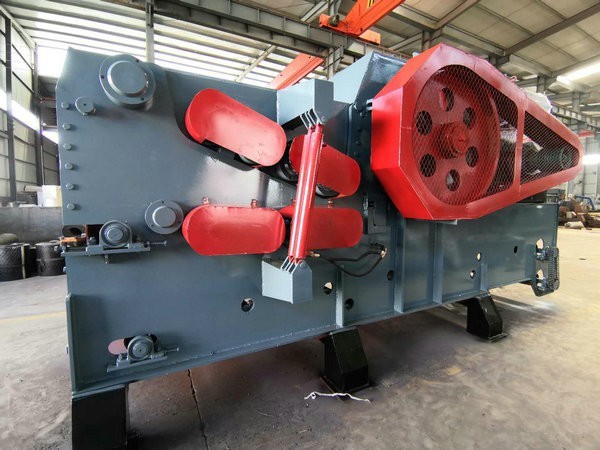
With the continuous development of technology, ultrasonic technology has demonstrated its unique advantages and application potential in multiple fields. In the wood processing industry, ultrasonic cutting, as a new type of cutting method, is gradually attracting people's attention. This article will explore the application prospects of ultrasonic cutting in wood chippers, in order to provide new ideas for the development of the wood processing industry.
Ultrasonic cutting is a technology that utilizes the energy generated by ultrasonic vibration for cutting and machining. Its working principle is to convert electrical energy into mechanical vibration energy through an ultrasonic generator, and then transmit this vibration energy to the cutting tool, so that the cutting tool can cut the workpiece while vibrating at high speed. This cutting method has the advantages of low cutting force, high cutting temperature, high cutting accuracy, and good surface quality.
Enhanced adaptability: Ultrasonic cutting technology shows good adaptability to different types and hardness of wood, which can broaden the application range of wood chippers.
Although ultrasonic cutting has many application advantages in wood chippers, it still faces some challenges in practical applications. For example, the high cost of ultrasonic generators and cutting tools may increase the overall investment of the equipment; In addition, ultrasonic cutting technology also requires relatively high skills from operators, who need to possess certain professional knowledge and operational skills.
 Address:Zibo, Shandong
 WhatsApp:+8615805335335
 Wechat: +8615805335335
  E-mail:zs@sdsmachinery.com